dingbo@dieselgeneratortech.com
+86 134 8102 4441

- Home
- Products
- About Us
- Service
- News
- Technical Support
- Contact Us
dingbo@dieselgeneratortech.com
+86 134 8102 4441
Nov. 28, 2025
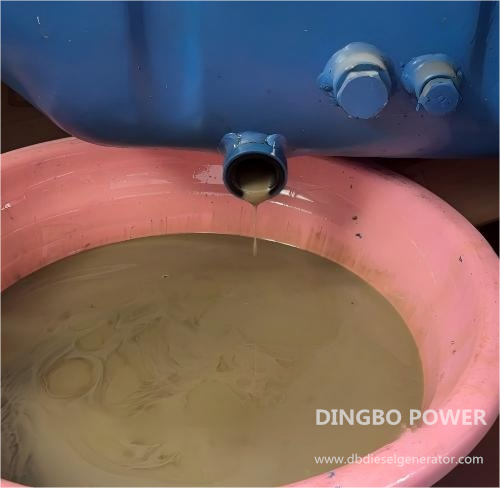
Diesel generator sets may sometimes experience failures during use, with varied symptoms and complex causes. Recently, Dingbo Power's after-sales team received a call from a customer reporting that their generator set's engine oil had turned milky white. We immediately went to the site for an inspection. After draining the oil, we confirmed it had indeed turned milky white, indicating that water had mixed into the oil, causing an emulsification reaction. So, what causes this phenomenon? Let's explore the reasons below.
This is one of the most common causes of engine oil emulsification in diesel generator sets. The internal structure of an oil cooler resembles a heat exchanger, where oil passages and coolant passages are closely adjacent to use the engine's coolant to lower the oil temperature.
After prolonged use, the oil cooler core can develop cracks or pinholes due to corrosion, vibration, or quality issues. Since the water pressure in the engine cooling system is usually higher than the oil pressure, coolant (water + antifreeze) can seep into the oil passages through these cracks, mixing with the oil and forming a milky mixture.
The cylinder liner is located within the cylinder block. It is an indispensable part of the engine's working cycle.
Cylinder liners can be divided into dry liners and wet liners. Wet liners have their outer surface in direct contact with the coolant, offering advantages like good heat dissipation, complex structure, and convenient maintenance. However, they are more susceptible to erosion and corrosion from the coolant, have relatively poorer sealing performance, and are prone to coolant leakage, which can also lead to water entering the oil pan.
The cylinder head gasket is located between the engine block and cylinder head, sealing the combustion chamber, oil passages, and coolant passages. If the engine has overheated, was installed improperly, or has reached the end of its service life, the cylinder head gasket can be burnt or blown. Once the seal between the water passage and oil passage fails, high-pressure coolant can enter the oil passage, causing oil emulsification. If the cylinder head gasket is blown, a leaking sound may be heard when starting the diesel generator, often accompanied by symptoms like lack of engine power and bubbles in the radiator.
This is a more severe but less common situation. Due to casting defects, freezing cracks (coolant freezing in winter), or severe overheating, cracks can develop in the cylinder head or engine block itself. If these cracks connect the coolant passage and the oil passage, coolant can seep into the oil. If a cylinder head crack is causing the leak, another symptom usually appears: water or bubbles emerging from the radiator filler cap when the diesel engine is started. If there are bubbles or water overflow from the radiator when starting the diesel generator set, and no gas leakage sound is heard around the cylinder gasket, it can generally be concluded that there is a crack in the cylinder head or pinholes in the cylinder liner.
This issue is particularly prominent for standby generator sets.
Scenario: The power generator starts frequently, runs for short durations, or operates in very humid environments.
Principle: The engine produces water vapor during operation. After the engine shuts down and cools, this water vapor condenses into water droplets inside the crankcase and mixes with the oil. If the unit never reaches a sufficiently high operating temperature (requires continuous operation for at least 1-2 hours), this moisture cannot evaporate and accumulates over time, leading to oil emulsification.
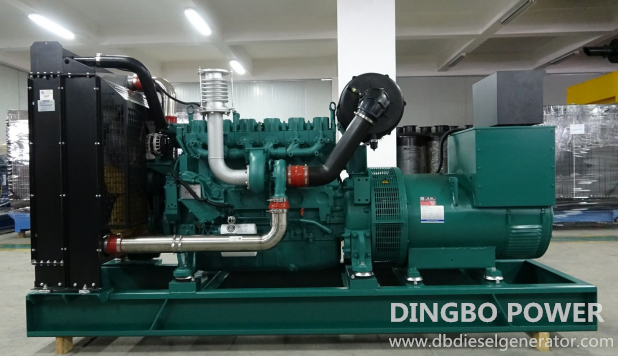
If the exhaust pipe of the diesel generating set is improperly installed, rainwater can enter the cylinder through the exhaust pipe and then find its way past the piston rings into the crankcase, contaminating the oil. Alternatively, during engine cleaning, high-pressure water jets might accidentally introduce water through openings like the oil filler cap or breather.
In the case mentioned above where Dingbo Power's after-sales team received the call about milky white oil, our investigation found that the customer had modified the exhaust pipe to lead outdoors. With frequent heavy rain recently, water flowed back down the pipe into the generator. This led to the oil emulsification.
Once oil emulsification is detected, you must immediately stop running the diesel generator set!
Absolutely do not start: Do not start the generator set again until the problem is resolved, as it can cause catastrophic damage.
Thoroughly replace oil and filters: The emulsified oil must be completely drained, and new oil filters and air filters (if also damp) must be replaced.
Identify the root cause: Based on the reasons above, find and fix the source of water ingress. Merely changing the oil without addressing the root cause will lead to rapid re-emulsification of the new oil.
For condensation issues: Ensure the diesel generator set reaches normal operating temperature and runs for a sufficient duration each time it operates (e.g., perform a monthly load test run for at least 1-2 hours) to evaporate moisture inside the crankcase.
In summary, diesel generator set engine oil turning milky white is a clear signal of water contamination. The most common causes are oil cooler leaks and cylinder head gasket failure. This is a serious fault that requires immediate shutdown and repair. Otherwise, it can lead to severe engine damage.
Dingbo Power focus on providing high quality diesel generator sets since 2006. Feel free to contact us with any questions, concerns, or inquiries to learn more about the products & services we provide.
Quicklink
Mob.: +86 134 8102 4441
Tel.: +86 771 5805 269
Fax: +86 771 5805 259
E-mail: dingbo@dieselgeneratortech.com
WhatsApp: +86 134 8102 4441
Add.: No. 10 Kechuang Road, High tech Zone, Nanning, Guangxi, China
Get in Touch
Enter your email and receive the latest news from us.