dingbo@dieselgeneratortech.com
+86 134 8102 4441

- Home
- Products
- About Us
- Service
- News
- Technical Support
- Contact Us
dingbo@dieselgeneratortech.com
+86 134 8102 4441
Jun. 13, 2026
What is the ATS?
ATS is called Automatic Transfer Switch, a dedicated automatic switching device for dual-power supply systems. In case of mains power failure or abnormal voltage, the ATS will automatically disconnect the mains circuit and switch the load to the diesel generator set. Once the mains supply returns to normal, it will switch back to mains power automatically, and the generator will shut down after a delayed cooling period. If there is no mains power access at the application site, an ATS is not required.
Applicable Installation Scenarios
ATS must be equipped for all sites with strict requirements on power supply continuity. Typical locations with critical loads include shopping malls, residential communities, hospitals, data centers and industrial plants.
Differences Between Built-in ATS and Independent ATS Cabinet
Built-in ATS: Matched with small-power generator sets, featuring simple wiring and convenient on-site installation. Independent ATS Cabinet: Mostly applied to high-power units and complex multi-load power distribution systems. It boasts a higher electrical safety level, stronger overload resistance and superior long-term operation stability.
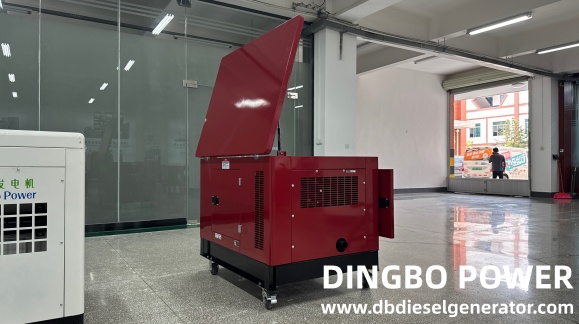
Air Intake Modes of Generator Sets
1. Naturally Aspirated
Working Principle: Air is drawn into the cylinder automatically by negative pressure generated during the piston downstroke, without a turbocharger.
Application: Small generator sets ≤50kW (small standby power, household use, minor construction sites)
Pros & Cons: Simple structure and low failure rate; lower power output at the same displacement, higher fuel consumption, severe power deration at high altitudes
Working Principle: Engine exhaust gas drives a turbine to compress intake air, raising intake pressure and air volume.
Application: Conventional units ranging from 60kW to 200kW (basic turbocharged models of Weichai, Yuchai)
Pros & Cons: 30%~50% higher power output than naturally aspirated engines; compressed air heats up, limiting air density and increasing the risk of high-temperature knocking
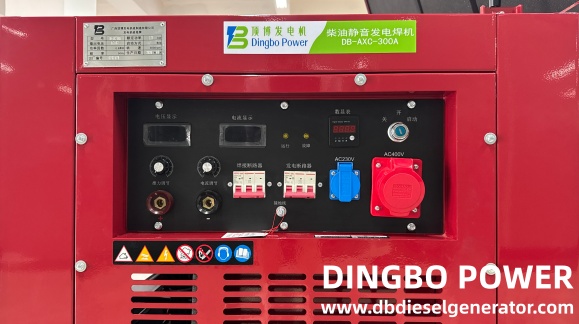
3. Turbocharged & Intercooled
Working Principle: Air compressed by the turbocharger flows through an intercooler for cooling (air-cooled / water-cooled), then low-temperature, high-density air enters the cylinders.
Application: Most Cummins, Weichai and Shangchai units above 80kW (standard configuration for foreign trade exports)
Advantages: Additional 15%~25% power boost, lower fuel consumption, cleaner exhaust emissions, excellent high-altitude adaptability
The supercharger is directly driven by crankshaft belts or gears to compress intake air. It delivers fast boost response at low revs yet consumes engine power itself, so it is barely adopted for generators.
If you want to know more about generators knowledge, feel free to contact Dingbo Power.
Quicklink
Mob.: +86 134 8102 4441
Tel.: +86 771 5805 269
Fax: +86 771 5805 259
E-mail: dingbo@dieselgeneratortech.com
WhatsApp: +86 134 8102 4441
Add.: No. 10 Kechuang Road, High tech Zone, Nanning, Guangxi, China
Get in Touch
Enter your email and receive the latest news from us.