dingbo@dieselgeneratortech.com
+86 134 8102 4441

- Home
- Products
- About Us
- Service
- News
- Technical Support
- Contact Us
dingbo@dieselgeneratortech.com
+86 134 8102 4441
Jan. 12, 2026
Continuous and stable power supply is crucial in modern industry, data centers, hospitals, and large commercial facilities. When a single generator set cannot meet the load demand or has extremely high requirements for power supply reliability, parallel operation of multiple generator sets becomes an ideal solution. Today, Dingbo will take you to explore how to achieve parallel operation of three diesel generator sets, and focus on analyzing the core advantages it brings.
To achieve safe and stable parallel operation, it is not simply about connecting the output cables of the units together, but a comprehensive technical system involving synchronous control, load distribution, and system protection.
Parallel control system (parallel cabinet): This is the brain of the system. Usually, automatic synchronous controllers are used to monitor the voltage, frequency, and phase of each unit in real time.
Generator set: Each unit needs to be equipped with an electronic speed regulator (controlling frequency/speed) and an automatic voltage regulator (controlling voltage) to ensure that its output electrical characteristics can be accurately adjusted.
Parallel bus (common bus): All unit outputs converge here and are then uniformly distributed to the load.
Protection and switching devices: including main circuit breakers, reverse power relays, fault protection devices, etc., to ensure system safety.
Synchronization (parallel operation): This is a prerequisite for parallel operation. The control system adjusts the voltage, frequency, and phase of the genset to be merged (such as Unit # 2) to be completely consistent with the operating bus (such as Unit # 1 power supply). When the phase difference approaches zero, the controller issues a command to close the output circuit breaker of the unit, achieving smooth grid connection and avoiding huge surge currents.
Load distribution: After successful parallel operation, the control system (by adjusting the throttle and excitation of each unit) automatically distributes active and reactive power according to a preset ratio (such as equal distribution), ensuring that all units work in coordination and balance, and avoiding overload or underload of individual units.
Monitoring and Management: The system continuously monitors the total load and the operational status of each unit. According to load changes, automatically execute the increase machine (start and put into standby units when the load increases) or decrease machine (unload and exit excess units when the load decreases) operation to achieve intelligent operation.
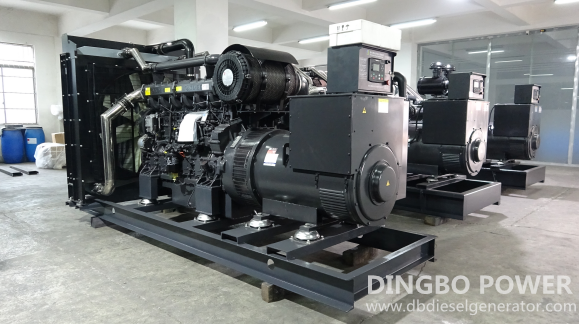
Compared with a single high-power generator or a simple master-slave switching scheme, the parallel system of three generators exhibits unparalleled technical and economic advantages:
This is the most prominent advantage. When any one of the units is shut down due to malfunction or routine maintenance, the remaining two units can continue to bear all or most of the critical loads without interruption of system power supply. This constitutes N+1 redundancy, providing fault tolerance capability for critical loads and serving as a guarantee for lifelines such as data centers and financial systems.
Optimize load rate and improve fuel efficiency: Diesel engines have the lowest fuel consumption rate at 70% -80% load rate. The parallel system can intelligently control the number of operating units based on the actual load size, so that each unit can work in the high-efficiency range as much as possible, significantly reducing long-term operating costs.
Reducing equipment wear and extending lifespan: Avoiding long-term low load operation (carbon deposition) or frequent overloading of a single unit, enabling all units to work in an optimized state, reducing maintenance costs, and extending overall lifespan.
Easy to invest and expand in stages: Initially, 2 units can be configured in parallel according to current demand. In the future, when demand grows, only 3 or more units need to be added to expand without abandoning existing equipment.
When a large capacity motor starts at the load end and generates instantaneous surge currents several times higher, the total capacity of the parallel system is larger, which can easily cope with this short-term overload, ensure the smooth start-up of all equipment, and maintain stable bus voltage without affecting the operation of other sensitive equipment.
It is possible to take turns shutting down and maintaining one unit according to the plan, while the other two units continue to supply power, achieving online maintenance and completely solving the problem of power outages during single machine maintenance.
Three diesel generating sets operate in parallel, achieving a leap from individual combat to collaborative combat through advanced automatic control technology. It is no longer just a simple power backup, but an intelligent, resilient, and efficient microgrid power system. Its N+1 redundancy reliability, excellent operational economy, strong load adaptability, and convenient uninterrupted maintenance make it the perfect choice for modern facilities that have strict requirements for power quality and continuity. When planning critical backup or continuous power systems, adopting a parallel scheme is a forward-looking investment.
If you want to learn more about diesel generator sets, please feel free to contact us at any time! Email: dingbo@dieselgeneratortech.com.

Quicklink
Mob.: +86 134 8102 4441
Tel.: +86 771 5805 269
Fax: +86 771 5805 259
E-mail: dingbo@dieselgeneratortech.com
WhatsApp: +86 134 8102 4441
Add.: No. 10 Kechuang Road, High tech Zone, Nanning, Guangxi, China
Get in Touch
Enter your email and receive the latest news from us.