dingbo@dieselgeneratortech.com
+86 134 8102 4441

- Home
- Products
- About Us
- Service
- News
- Technical Support
- Contact Us
dingbo@dieselgeneratortech.com
+86 134 8102 4441
Jan. 13, 2026
Selecting the optimal fuel tank configuration for a diesel generator set is a critical decision impacting installation, operation, safety, and total cost of ownership. The debate between integrated base tanks and separated (external) fuel tanks is central to this process. This analysis outlines the key characteristics, advantages, and considerations of each to inform your specification.
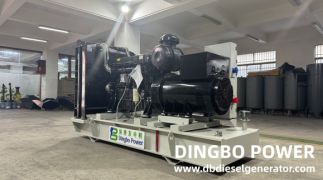
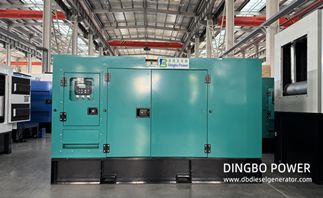
Integrated Bottom Fuel Tank:An integrated tank is built into the generator set or enclosure, forming a single, compact unit.
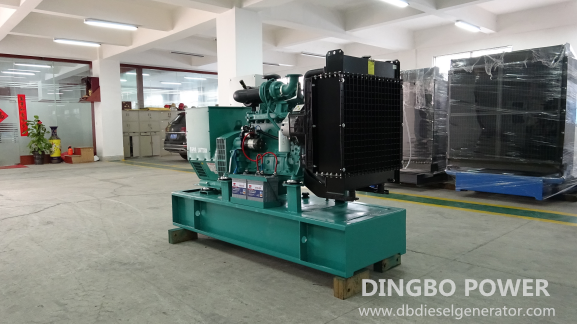
Separated (External) Fuel Tank:A separated configuration involves one or more remote fuel storage tanks installed independently from the diesel generating set, connected via supply and return lines.
| Comparison of Separated Fuel Tank vs. Integrated Base Tank for Diesel Generator Sets | ||
| Feature | Separated Fuel Tank | Integrated Base Tank |
| Installation Space | Requires additional footprint | Space-efficient, no extra footprint needed |
| Fuel Capacity | Typically larger capacities available | Limited by generator footprint (usually ≤ 1,000 liters) |
| Maintenance & Repair | Easier to access and service independently | Requires moving entire generator set for major tank work |
| Safety Considerations | Can be located further from generator, reducing fire risk | Fuel always present beneath generator, increasing fire hazard |
| Leak Risks | Potential at connection points; contained away from generator | Leaks directly affect generator components |
| Installation Complexity | More complex (requires piping, connections) | Simplified installation (pre-assembled) |
| Relocation Flexibility | Generator can be moved independently of tank | Entire unit must be moved together |
| Common Applications | Large standby power, continuous operation, industrial use | Small to medium standby, portable applications, space-limited sites |
| Regulatory Compliance | Often easier to meet separation requirements | May require additional fire protection measures |
| Fuel Contamination Risk | Lower (settling tanks possible, easier inspection) | Higher (sediment accumulation near fuel intake) |
The optimal choice is not universal but depends on the specific application's priorities:
* Choose an Integrated Bottom Tank if: Space is at a premium, initial budget is a primary constraint, runtimes required are relatively short (e.g., standard backup for commercial buildings), and simplicity of deployment is key. It is the standard and often optimal choice for most standby generator applications.
* Opt for a Separated Fuel Tank System if: Extended runtime is non-negotiable (e.g., for prime power, remote mining, telecom towers, or critical facilities), operational uptime and ease of maintenance are paramount, local codes dictate remote fuel storage, or you require a centralized fuel supply for multiple generator sets. This is the domain of industrial, mission-critical, and large-scale applications.
Read more: How to Choose Between External Tanks and Base Tanks for Diesel Generator Sets?
In summary, the integrated base tank offers a compact, cost-effective, and simple solution for standard backup power needs. In contrast, the separated fuel tank configuration delivers superior flexibility, scalability, and serviceability for demanding, high-uptime, or long-duration applications, albeit at a higher initial complexity and cost. A thorough evaluation of your runtime requirements, site constraints, lifecycle cost expectations, and regulatory environment will clearly guide you toward the most reliable and efficient configuration for your diesel generator set.
Quicklink
Mob.: +86 134 8102 4441
Tel.: +86 771 5805 269
Fax: +86 771 5805 259
E-mail: dingbo@dieselgeneratortech.com
WhatsApp: +86 134 8102 4441
Add.: No. 10 Kechuang Road, High tech Zone, Nanning, Guangxi, China
Get in Touch
Enter your email and receive the latest news from us.