dingbo@dieselgeneratortech.com
+86 134 8102 4441

- Home
- Products
- About Us
- Service
- News
- Technical Support
- Contact Us
dingbo@dieselgeneratortech.com
+86 134 8102 4441
Nov. 24, 2025
Selecting the correct generator size is critical for ensuring the reliability, efficiency, and longevity of both your generator set and the equipment. If you are unsure what size generator you need, the process boils down to one key principle: understand the electrical demands of all the equipment you plan to run.
Here is a simple guide to help you determine the perfect generator size for your application.
The first and most crucial step is to create a comprehensive list of every device you intend to connect to the generator set.
1. Identify Each Device: List all equipment, from the largest machinery to the smallest tools or lighting systems.
2. Find the Power Rating: For each device, find its power rating, usually listed on a nameplate or in the user manual. This is typically given in Watts (W) or Kilowatts (kW). (1 kW = 1000W).
3. Calculate Total Running Wattage: Add up the running wattage of all devices that will be operating simultaneously. This gives you the total power you need just to keep everything running.
However, the calculation doesn't stop here. The most important factor is often the startup surge—the brief burst of power required to start an electric motor.
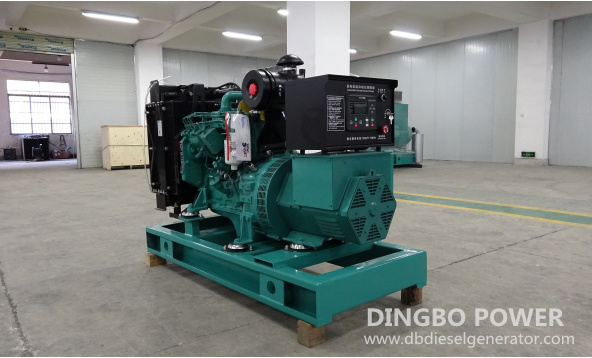
Equipment starts in one of two primary ways, and this dramatically affects your generator size choice.
The equipment requires a very high initial surge of power (up to 3-6 times its running wattage) to start. This is typical for devices with large electric motors or simple resistive elements.
Common Examples:
· Air Conditioners & Compressors
· Water Pumps
· Power Tools (e.g., circular saws)
· Refrigerators/Freezers
· Incandescent Lights
Generator Sizing Rule: Your diesel generating set must be sized to handle the maximum surge wattage, not just the running wattage. Failure to do so will cause the generator to stall or trip its circuit breaker every time a hard-start device kicks on.
The equipment uses electronic controls to gradually ramp up the motor speed, significantly reducing the startup surge. Many modern and high-efficiency appliances use this technology.
Common Examples:
· Devices with Inverter Technology (e.g., inverter ACs, fridge)
· Equipment with Variable Frequency Drives (VFDs)
· Modern CNC Machines
· LED Lighting
· Computers and Servers
Generator Sizing Rule: Since the startup surge is minimal (often only 1.1 to 1.5 times the running wattage), your diesel generator can be sized much closer to the total running wattage.
Use the following approach to determine your final generator size requirement:
1. List & Calculate:
· Total Running Watts: Sum of the running watts of all simultaneous equipment.
· Largest Starting Surge: Identify the single device with the highest starting wattage requirement.
2. Final Calculation Formula:
· For systems with Hard-Start equipment:
Generator Size Needed = Total Running Watts + Highest Surge Wattage from a Hard-Start Device
· For systems with ONLY Soft-Start equipment:
Generator Size Needed = Total Running Watts + a small buffer (10-20%)
Practical Example:
Devices: Air Conditioner (Hard-Start) + Water Pump (Hard-Start) + LED Lights (Soft-Start) + Computer (Soft-Start)
· Running Watts: A/C (1500W) + Pump (1000W) + Lights (200W) + Computer (300W) = 3000W Total Running
· Surge Watts: A/C Surge = 4500W, Pump Surge = 3000W. The A/C has the highest surge.
· Generator Size Needed: 3000W (Total Running) + 4500W (Largest Surge) = 7500 Watts Minimum
In this case, you would select an 8kW - 10kW generator set for a safe operating margin.
Never guess your generator size. An undersized generator set will fail to power your equipment and may get damaged. An oversized generator is inefficient and costs more to purchase and operate.
Thus, before you buying a power generator, you need to calculate the total power needs required and make sure the power capacity of generator can meet your needs. Looking for a diesel generator for your business? Contact us at dingbo@dieselgeneratortech.com, and we will gladly help you.
Quicklink
Mob.: +86 134 8102 4441
Tel.: +86 771 5805 269
Fax: +86 771 5805 259
E-mail: dingbo@dieselgeneratortech.com
WhatsApp: +86 134 8102 4441
Add.: No. 10 Kechuang Road, High tech Zone, Nanning, Guangxi, China
Get in Touch
Enter your email and receive the latest news from us.